Source competition flat bench press rack for Gymnasium Home Park
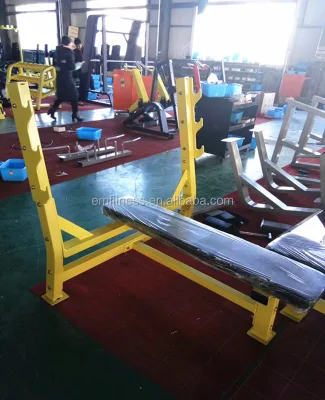
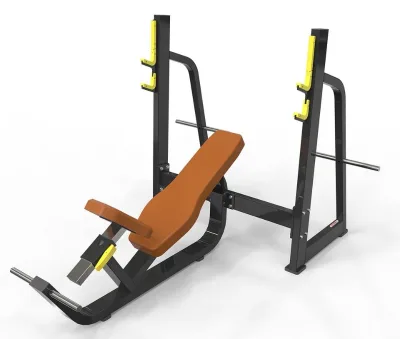
Compare 30 competition flat bench press rack options from verified Chinese manufacturers. Buyers can evaluate steel thickness, dimensions, and customization features for commercial and home gym applications.
Key considerations
Products List






Comprehensive Sourcing Guide
Strategic Sourcing Guide for Competition Flat Bench Press Racks
Understanding the Technical Architecture of Competition Racks
When sourcing a competition flat bench press rack, the primary objective is to identify equipment that meets rigorous structural integrity standards while accommodating the specific biomechanics of competitive lifting. The market offers a diverse array of configurations, ranging from compact home units to heavy-duty commercial systems. A critical observation from current product listings indicates that the core material composition for these racks is predominantly steel. This material choice is non-negotiable for competition-grade equipment, as it provides the necessary tensile strength to withstand dynamic loads generated during maximal lifts.
The structural dimensions of these racks vary significantly based on their intended application and model specifications. Buyers must carefully examine the standard product dimensions provided by suppliers. For instance, specific models in the current market are documented with dimensions such as 130012501300 mm, while others reach larger footprints like 173015001630 mm or even 215195163 cm. These variations directly impact the floor space required for installation and the range of motion available to the athlete. Furthermore, the steel thickness is a vital specification; observed data points to a steel thickness of 3mm for certain heavy-duty units, which is a strong indicator of robustness. In contrast, other specifications list steel pipe parameters such as 50701.5mm, suggesting that buyers must distinguish between frame thickness and component pipe gauge to ensure the rack can handle the intended load without flexing or failing.
The weight of the unit itself is another critical technical parameter. A competition rack must be stable enough to prevent tipping during a failed lift. Market observations show units weighing as much as 121kg or even 550kg for single packages. The heavier the unit, generally, the more stable it is, but this also influences shipping logistics and installation requirements. Buyers should verify the "Single Gross Weight" and "Single Package Size" to plan for appropriate handling equipment, such as forklifts or pallet jacks, especially when dealing with units exceeding 500kg. Additionally, the presence of counterweights, with some models specifying 50kg per side, adds to the stability and functionality of the rack, allowing for adjustable resistance or safety mechanisms depending on the design.
Compliance and Certification Verification Protocols
In the realm of competitive sports equipment, compliance is not merely a formality but a fundamental requirement for safety and legal operation. When evaluating potential suppliers, buyers must prioritize products that carry recognized international certifications. The current market data highlights several key certifications associated with these racks, including CE (Conformité Européenne) and ISO standards. Specifically, listings frequently reference CE and ISO certifications, with some units also noting RoHS (Restriction of Hazardous Substances) compliance. These certifications indicate that the product adheres to specific safety, health, and environmental protection requirements.
However, the presence of a certification label on a product listing does not automatically guarantee that every unit in a shipment meets the standard. Buyers must treat certification as an observation of the product line rather than an absolute claim for every individual item unless verified. It is essential to request valid certification documents directly from the supplier for the specific batch being purchased. The documentation should be traceable to the specific model numbers, such as ASJ-L8042, PS14, TM31, or J009, which are observed in the current market.
Furthermore, the origin of the product plays a role in the certification process. Many of the observed products originate from specific regions in China, such as Shandong or Hunan. While these regions are major manufacturing hubs, buyers should verify that the manufacturing facility holds the necessary quality management system certifications that align with the product certifications. For instance, a product claiming CE certification must have been tested and approved by a notified body recognized within the European Union. Buyers should also be aware of the distinction between different types of certifications; for example, ISO standards may refer to quality management (ISO 9001) or specific product safety standards, and the exact nature of the standard should be clarified.
Cost Drivers and Pricing Dynamics
The pricing of competition flat bench press racks is influenced by a complex interplay of factors, including material costs, manufacturing complexity, customization options, and logistics. The observed price range in the current market spans from $16 to $1,999.99 USD. This wide disparity suggests that the market includes everything from basic, lightweight home units to fully equipped, heavy-duty commercial racks with advanced features. Buyers must be cautious not to equate a lower price with a lower quality in all cases, but they should also recognize that extremely low prices may indicate the use of inferior materials or a lack of necessary certifications.
Material costs are a primary driver of price. The use of high-grade steel with specific thicknesses, such as 3mm, significantly increases the cost compared to thinner gauge steel. Additionally, the inclusion of accessories, such as high-pull back, low-pull back, and inverted PED (Pull-Down Exercise Device) attachments, adds to the overall value and price of the unit. Customization is another significant cost factor. The market data indicates that customization is available for these racks, including options for customized logos, patterns, and colors. Techniques such as silicone printing, laser printing, and digital printing are used for branding, and the complexity of these processes can influence the final price.
Logistics and shipping also play a crucial role in the total cost of ownership. The "Shipment" method is typically by sea, which is cost-effective for large, heavy items but adds time to the procurement cycle. The "40hq" (40-foot high cube container) capacity is noted as 98 sets for certain models, which helps buyers calculate shipping efficiency. However, the "Single Package Size" and "Single Gross Weight" must be considered to determine the number of containers required. For example, a unit weighing 550kg will require specialized handling and potentially separate shipping arrangements compared to lighter units. Buyers should also factor in the "Production" lead time, which is observed to be around 30 days, into their budget planning to avoid delays.
Typical Applications and Usage Scenarios
Competition flat bench press racks are designed to serve a variety of settings, from professional training facilities to community centers. The "Appliance" category observed in the market includes Home, Gymnasium, Park, and Community. This versatility allows buyers to select racks that fit their specific environment. For commercial applications, such as professional gyms or training centers, the focus is on durability, high weight capacity, and the ability to withstand frequent, heavy use. These environments often require racks with larger dimensions, such as 269022352340 mm, to accommodate multiple users and heavy loading.
In contrast, home and community applications may prioritize space efficiency and ease of use. Units with dimensions like 130012501300 mm or 173015001630 mm are more suitable for these settings. The "Folded" status is noted as "Unfolded" in the product attributes, suggesting that these racks are designed for permanent installation rather than portability. However, the "Packing" options, which include Carton, Plywood Box, and Wooden Box, indicate that the racks are shipped in protective packaging to prevent damage during transit.
The "Exercise Part" is another consideration. Some racks are specifically designed for chest exercises, while others offer multi-functional capabilities. The "Item" description, such as "Multi Press Rack / Rack Multi Bench Press," suggests that these units can support various exercises beyond just the bench press, making them versatile additions to any facility. The "Age Group" is listed as "Adult," confirming that these racks are intended for mature users who have the strength and technique to handle heavy loads safely.
Supplier Evaluation and Selection Criteria
Selecting the right supplier is a critical step in the procurement process. Buyers should evaluate suppliers based on their ability to provide accurate product information, maintain consistent quality, and offer reliable after-sales support. The "Brand Name" observed in the market, such as "Brightway," can be a factor, but buyers should not rely solely on brand recognition. Instead, they should verify the supplier's track record, production capacity, and quality control measures.
The "Customization" availability is a key differentiator among suppliers. Suppliers that offer customized logos, patterns, and colors demonstrate flexibility and a commitment to meeting specific client needs. The "Logo" attribute, which includes options for customized logos and specific printing techniques, indicates that suppliers are willing to engage in branding partnerships. However, buyers should ensure that the customization process does not compromise the structural integrity of the rack.
The "Production" lead time of 30 days is a standard benchmark, but buyers should confirm if this can be expedited or if it varies based on order volume. The "MOQ" (Minimum Order Quantity) range of 1 to 65 units suggests that suppliers are flexible, catering to both small and large orders. Buyers should also consider the "Shipment" method and the "40hq" capacity to ensure that the supplier can handle the logistics of their order efficiently.
Quality Control and Inspection Standards
Quality control is paramount when sourcing competition-grade equipment. Buyers should implement a rigorous inspection process to ensure that the received products meet the specified standards. The "Standard" dimensions, such as 130012501300 mm or 173015001630 mm, should be verified upon receipt to ensure that the product matches the ordered specifications. The "Steel Thickness" and "Steel Pipe Parameters" should also be measured to confirm that the material quality is as advertised.
The "Packing" method is another area of focus. The use of Plywood Box, Carton, or Wooden Box packaging should be inspected to ensure that the product is protected during transit. Any signs of damage to the packaging should be documented immediately, as this could indicate issues with the product itself. The "Single Gross Weight" and "Single Package Size" should be checked to ensure that the shipping documentation matches the physical goods.
Buyers should also request test results or performance data from the supplier, although such data is not always provided in the initial product listings. If available, these documents can provide valuable insights into the product's durability and safety. The "Certificate" of CE and ISO should be verified for authenticity, and the supplier should be able to provide documentation that links the certificate to the specific product model.
Long-Term Procurement and Maintenance Considerations
Sourcing a competition flat bench press rack is a long-term investment that requires careful planning for maintenance and lifecycle management. The "Material" of steel is durable, but it is susceptible to rust and corrosion if not properly maintained. Buyers should inquire about the surface treatment and finish of the steel to ensure that it is resistant to environmental factors. The "Color" options, which include "More Colors for Choice or Customised," can also affect the longevity of the product, as some finishes may be more durable than others.
The "Applications" of the rack, whether for Home, Gymnasium, Park, or Community, will influence the maintenance requirements. Commercial environments, in particular, require more frequent inspections and maintenance to ensure safety. Buyers should establish a maintenance schedule that includes regular checks of the structural integrity, the condition of the steel, and the functionality of any moving parts or accessories.
The "Production" lead time and "Shipment" method should be considered when planning for future orders or replacements. A reliable supplier with a consistent production schedule can help ensure that the facility has the necessary equipment available when needed. Additionally, the availability of spare parts and accessories, such as the "High-Pull Back" or "Low-Pull Back" attachments, should be confirmed to ensure that the rack can be maintained and upgraded over time.
In conclusion, sourcing a competition flat bench press rack requires a comprehensive understanding of technical specifications, compliance requirements, cost drivers, and supplier capabilities. By carefully evaluating these factors and implementing robust quality control measures, buyers can secure high-quality equipment that meets the demands of competitive lifting and ensures the safety of users.
FAQs
What certifications do competition flat bench press racks typically have?
Most racks carry CE and ISO certifications, with some models also including RoHS compliance. Buyers should verify these labels against specific model numbers like ASJ-L8042 or PS14 to ensure the batch meets safety standards.
Which steel thickness indicates a heavy-duty competition rack?
Heavy-duty units often feature a steel thickness of 3mm for robust structural integrity. Thinner gauges like 1.5mm may be used for specific pipe parameters, so buyers must distinguish between frame thickness and component gauge.
Can buyers request customized logos on these racks?
Yes, customization is available for logos using silicone, laser, or digital printing techniques. Suppliers offer this option across various models, allowing brands to apply specific patterns or text to the equipment surface.
How long is the standard production lead time for these racks?
The standard production lead time is typically around 30 days. This duration applies to manufacturing the units before they are packed in cartons, plywood boxes, or wooden crates for shipment.
What is the typical price range for competition flat bench press racks?
Prices in the current market range from 16 to 1999.99 USD depending on specifications. Higher costs often correlate with heavier weights, larger dimensions, and additional features like counterweights or specialized accessories.
Which origins are common for these steel gym racks?
Products commonly originate from Shandong or Hunan regions in China. These locations are major manufacturing hubs where factories produce racks with varying dimensions and steel pipe parameters for global export.
What packing methods are used for shipping these heavy units?
Racks are shipped using carton, plywood box, or wooden box packing methods. The choice depends on the unit weight, with some single packages weighing up to 550kg requiring sturdy wooden protection.